Foundation Stabilisation
Underpinning in Stratford-on-Avon
Need to know whether underpinning is necessary? Get a Free Estimate
Foundation Stabilisation
Need to know whether underpinning is necessary? Get a Free Estimate
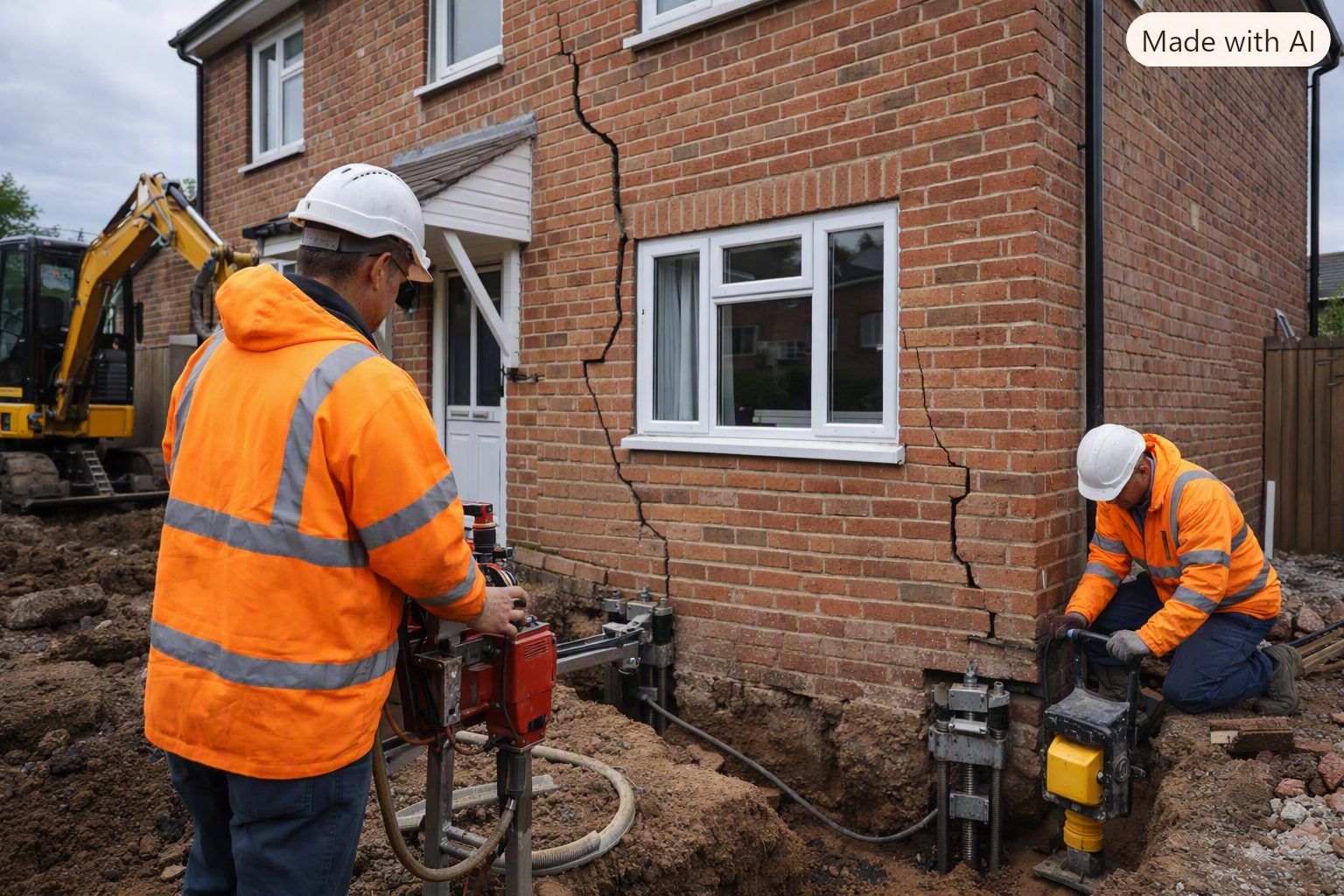
Underpinning is a significant structural intervention used to improve or extend the support provided by existing foundations. It can be appropriate where foundation movement or inadequate bearing capacity is contributing to ongoing structural problems.
It should not be the automatic response to a crack. We first consider the evidence for movement and the likely cause before discussing whether underpinning is appropriate.

Different buildings and ground conditions call for different approaches. The method, depth and extent of underpinning must be determined by the property's specific structural requirements.
We examine the affected structure and consider whether the existing foundations are contributing to the movement.
Where underpinning is appropriate, the extent and sequence of support work must be carefully considered.
Some properties may only require intervention to particular sections rather than across the whole building.
After foundation work, affected masonry and finishes can be addressed as part of the wider repair.
| Service | Estimated Cost | Average |
|---|---|---|
| Small localised underpinning | £3,000–£8,000 | £5,500 |
| Typical residential underpinning | £8,000–£20,000 | £14,000 |
| Extensive underpinning | £20,000–£40,000+ | £30,000 |
Indicative figures only. Underpinning costs depend heavily on foundation depth, ground conditions, property size, access, engineering requirements and the chosen system.

We believe underpinning should be considered because the evidence supports it, not simply because a property has cracks.
Foundation work requires a controlled approach that takes account of the building and its surrounding conditions.
Our Stratford-on-Avon team understands the variety of property types found across Warwickshire.
If you have been told your property needs underpinning, ask us to help you understand why and what the work involves. [CTA:estimate]
Free — no obligations
We discuss the property's symptoms and review available survey or structural information.
The affected structure and relevant ground or foundation conditions are assessed to determine what is contributing to movement.
If underpinning is justified, the required extent and sequence of work are considered carefully.
The agreed foundation work is completed before affected structural finishes are repaired as appropriate.